|
Zipeng Wang I am a second-year Ph.D. student in Computer Science at HKUST, advised by Prof. Dan Xu. I am currently working on 3D reconstruction and perception, with a focus on improving the time and memory efficiency. Prior to that, I received my MPhil degree from HKUST(GZ), advised by Prof. Lin Wang. I received my B.Eng. degree from Beihang University. |
|
News
|
ResearchI am interested in efficient 3D reconstruction and perception. Most of my research is about reconstructing and understanding the 3D world from images in a time/memory efficient manner. I've also worked on event cameras, a novel type of sensor that captures the changes in intensity of light over time. |
|
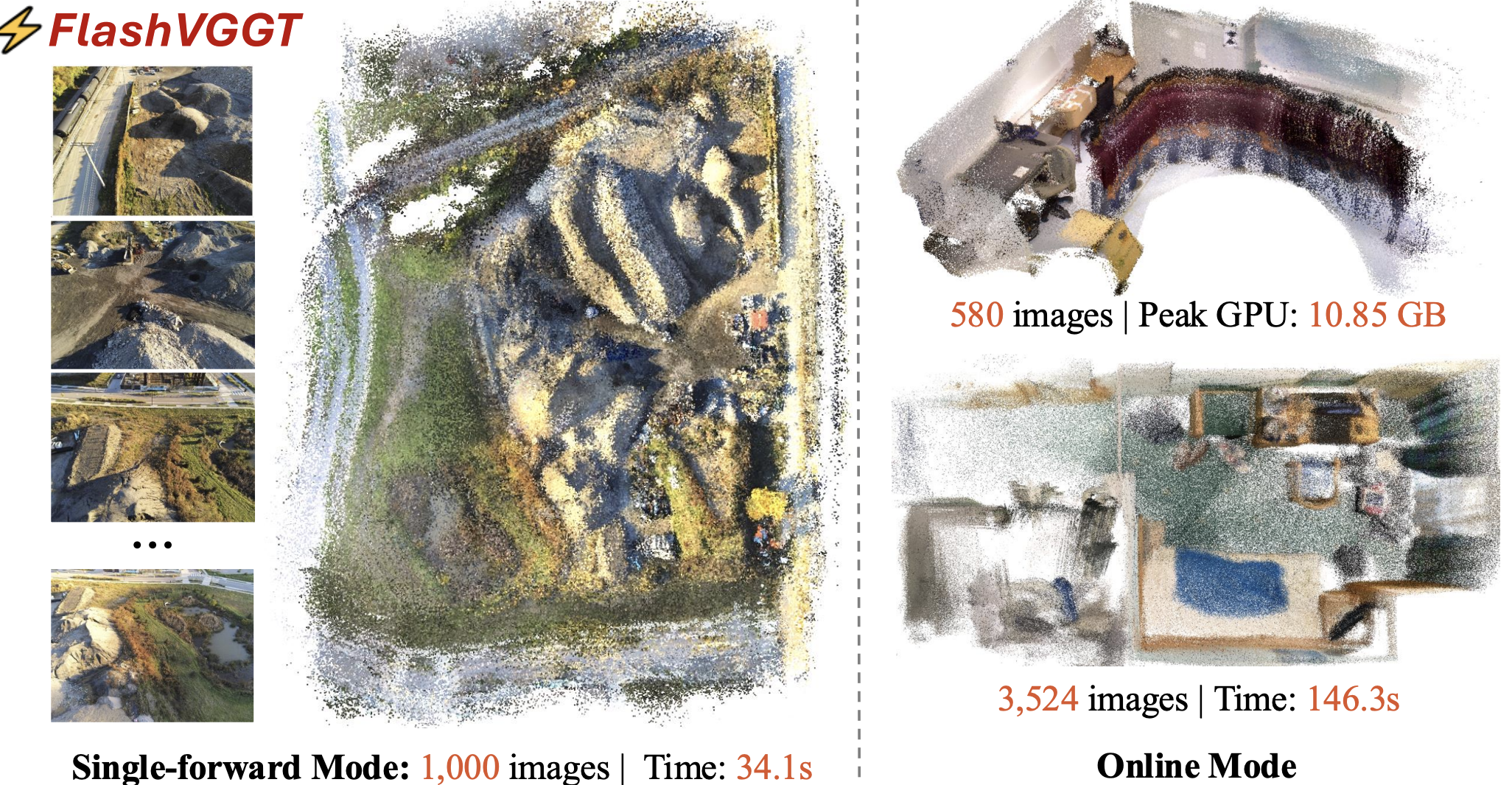
FlashVGGT: Efficient and Scalable Visual Geometry Transformers with Compressed Descriptor Attention
Zipeng Wang, Dan Xu CVPR, 2026 project page / arXiv / code Accelerate VGGT with more efficient global attention for ~10x faster inference on 1K images and scaling to 3K+ images. |
|
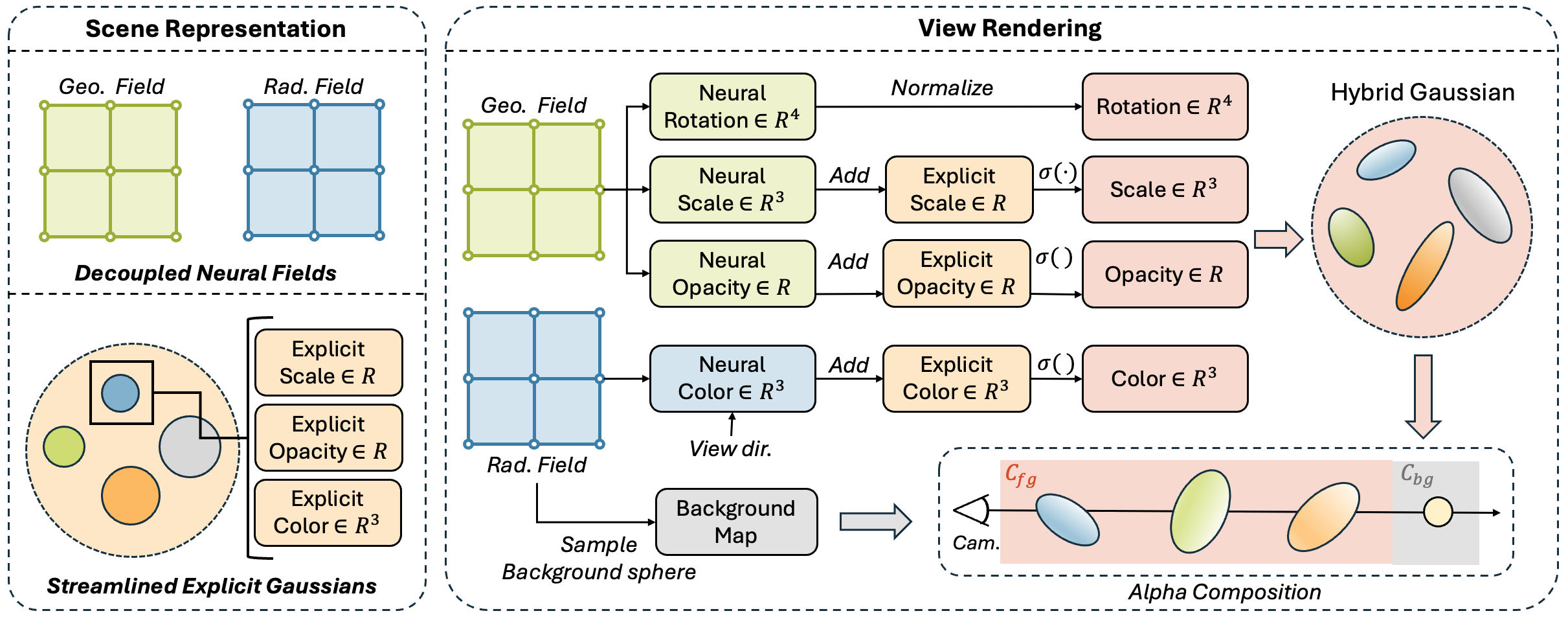
HyRF : Hybrid Radiance Fields for Memory-efficient and High-quality Novel View Synthesis
Zipeng Wang, Dan Xu NeurIPS, 2025 project page / arXiv / code Combining neural scene representations with 3DGS rasterization for SOTA quality, NeRF size and 3DGS speed. |
|
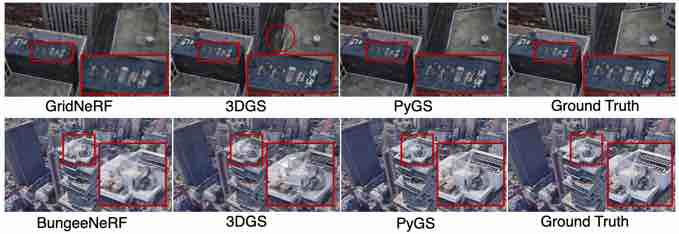
PyGS : Large-scale Scene Representation with Pyramidal 3D Gaussian Splatting
Zipeng Wang, Dan Xu Preprint, 2024 project page / arXiv Representing large 3D scenes with a hierarchical assembly of Gaussians arranged in a pyramidal fashion. |
|
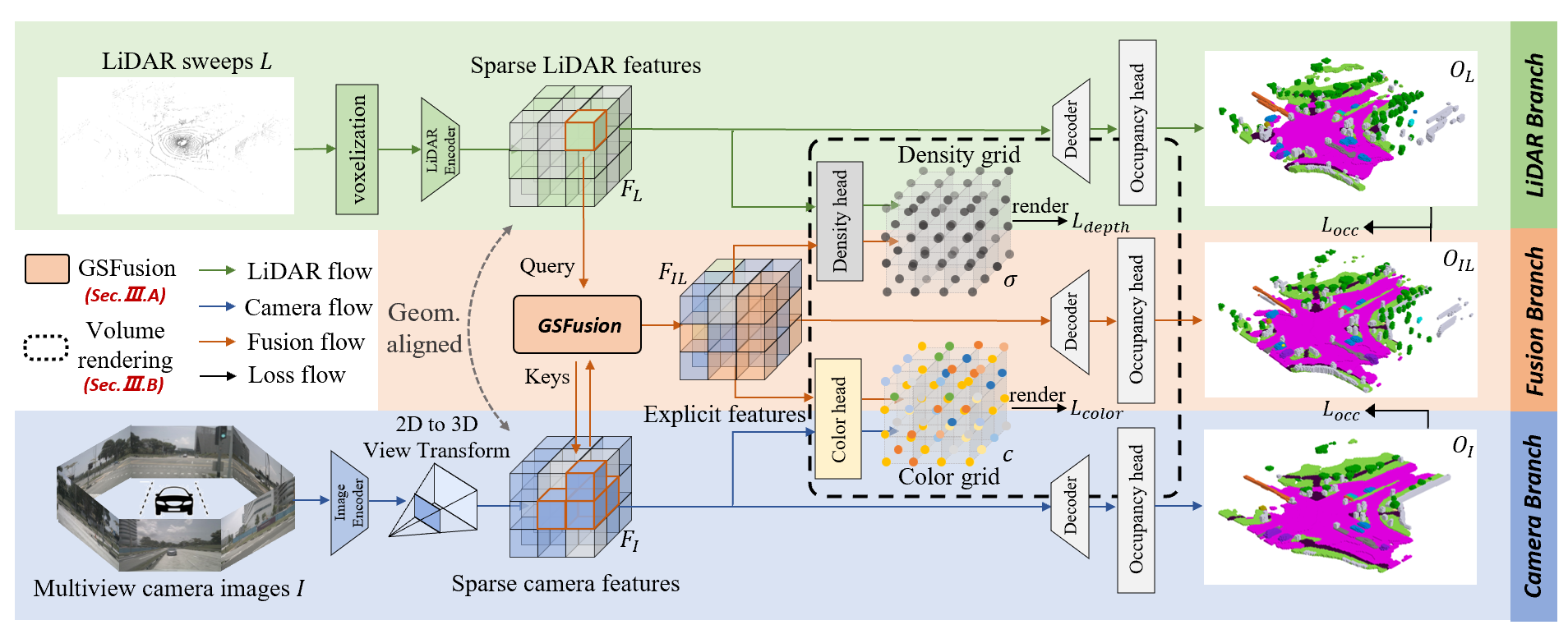
Co-Occ: Coupling Explicit Feature Fusion with Volume Rendering Regularization for Multi-Modal 3D Semantic Occupancy Prediction
Jingyi Pan, Zipeng Wang, Lin Wang IEEE Robotics and Automation Letters, 2024 project page / arXiv / code NeRF-style implicit volume rendering helps LiDAR-camera feature fusion in occupancy prediction. |
|
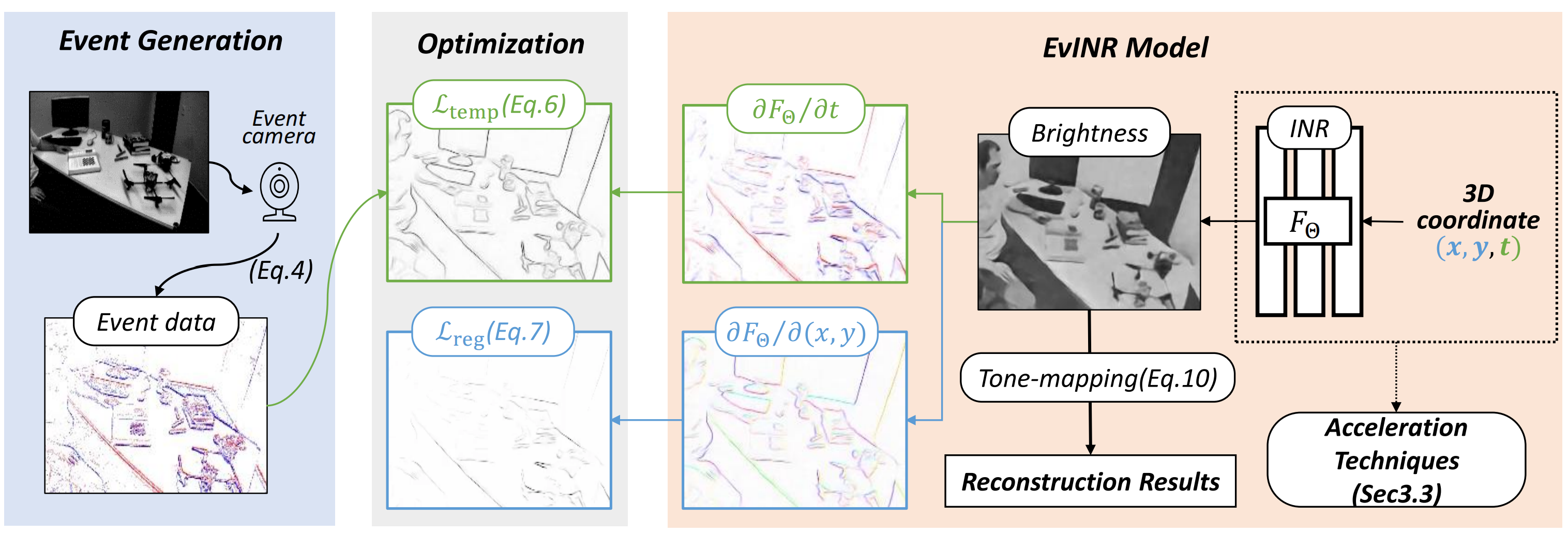
Revisit Event Generation Model: Self-Supervised Learning of Event-to-Video Reconstruction with Implicit Neural Representations
Zipeng Wang, Yunfan LU, Lin Wang ECCV, 2024 project page / arXiv / code Use a fully connected MLP to implicitly solve the event generation equation and reconstruct intensity from event streams. |
|
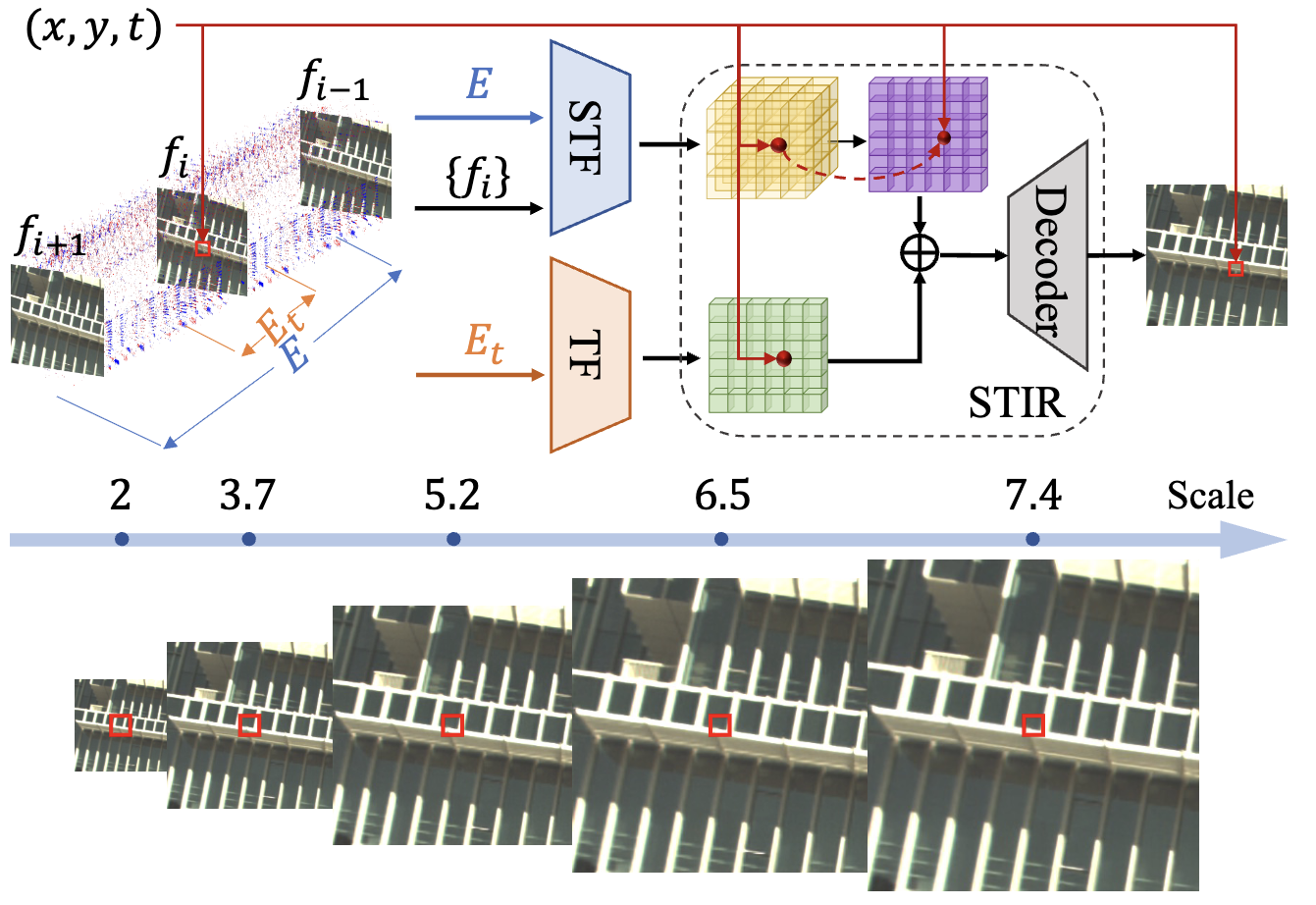
Learning Spatial-Temporal Implicit Neural Representations for Event-Guided Video Super-Resolution
Yunfan Lu, Zipeng Wang, Minjie Liu, Hongjian Wang, Lin Wang CVPR, 2023 project page / arXiv / code Spatial-Temporal super-resolutiion with event cameras with an implicit neural representation formation. |
Teaching
|
|
Source code from Jon Barron's personal website. |